How It Works For Residents For Site Owners For Advisors Communities Blog Sign In Join a Community

The CPO journey

From first conversation to front door.

Collective self-build in the Netherlands moves through four distinct phases — each with different legal requirements, different professional expertise, and different group dynamics. CrowdBuilding provides the structure for all four, from matching your first households to closing out the Wkb dossier at handover.

Start your journey Browse communities

Step by step

The four phases of CPO

Phase 1

Group Formation

2–6 months

The first phase is about finding the right people. CrowdBuilding matches households based on region, household size, programme preferences, and timeline. Once a group forms, the platform helps you draft a group charter — the document that defines your shared ambitions, decision-making rules, and exit terms.

  • Platform-facilitated matching by region and preferences
  • Shared group charter template and guided completion
  • Communication workspace for the group
  • Introductions to CPO process advisors
Phase 2

Site Acquisition

3–12 months

Finding and securing a building site is often the hardest phase for CPO groups. Municipalities increasingly reserve plots for CPO through the Omgevingsplan, but the tender process is complex. CrowdBuilding connects your group with available sites and helps you prepare a strong CPO application.

  • Browse sites offered by municipalities and private landowners
  • Municipality CPO-tender guidance through platform advisors
  • Legal support for land purchase or leasehold (erfpacht)
  • Notary introductions for preliminary purchase agreements
Phase 3

Design & Permits

6–18 months

With land secured, your group enters the design and permitting phase. This is where the programme you defined in Phase 1 becomes an architectural brief. The new Wet kwaliteitsborging voor het bouwen (Wkb) has changed the quality-assurance process for self-builders significantly since 2024.

  • Shared programme design facilitation (density, budget/m², sustainability)
  • Architect selection and brief preparation
  • Omgevingsvergunning (environmental permit) navigation
  • Wkb compliance: kwaliteitsborger appointment and bouwactiviteit notification
Phase 4

Build & Handover

12–24 months

The build phase turns your collective plans into physical homes. As CPO clients, your group collectively manages the contractor relationship. CrowdBuilding helps coordinate the admin layer — payment milestones, shared cost accounting, and the formal handover documentation required under Wkb.

  • Contractor tendering support with CPO-experienced builders
  • Shared cost accounting and milestone tracking
  • Wkb gereedmelding (completion notification) and dossier bevoegd gezag
  • Handover checklist and post-build community onboarding

How it connects

Three stakeholders. One platform that connects them.

A CPO project requires households with a programme, a site to build on, and professionals who know the process. CrowdBuilding connects all three — and makes sure the right introductions happen at the right moment.
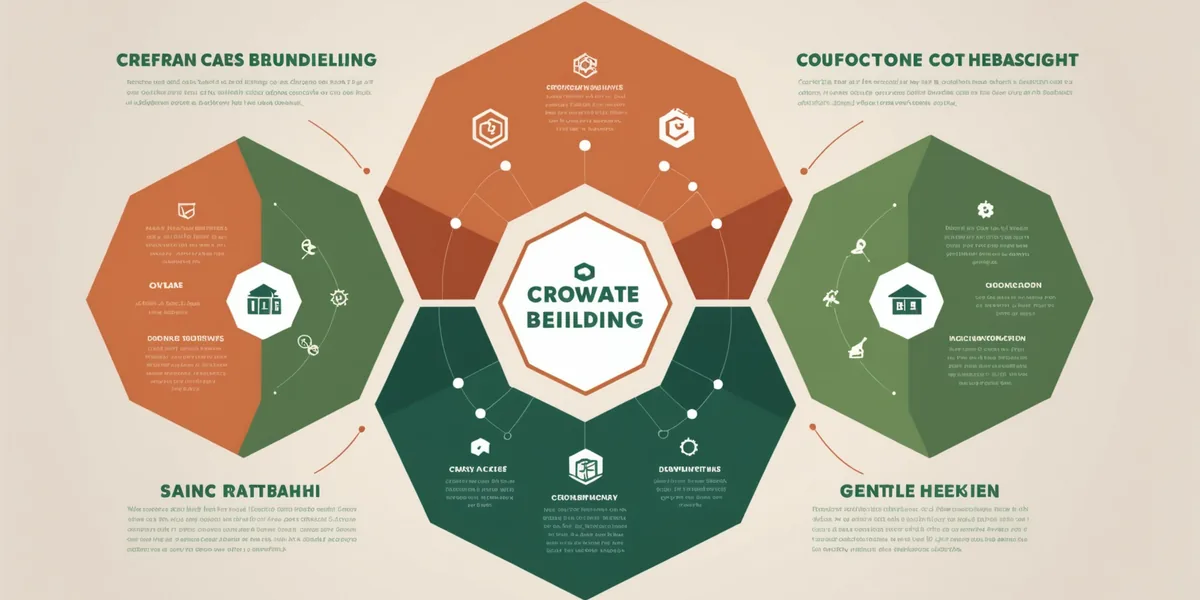
Diagram showing three stakeholder types — Residents, Site Owners, and Advisors — connected through the CrowdBuilding platform hub

Common questions

FAQ

CPO is a Dutch housing model in which a group of private households collectively acts as the developer of their own homes. Instead of buying from a developer, the group owns the process — they commission the architect, select the contractor, and make shared decisions about design. The result is homes that are typically 15–25% more affordable than developer-built alternatives of the same specification, because there is no developer profit margin.
From registering with CrowdBuilding to moving in, most CPO projects take 3–5 years. The range is wide because site availability is the biggest variable. Groups in regions where municipalities actively offer CPO plots (Amsterdam, Utrecht, Eindhoven, Haarlem) tend to move faster than those searching privately. Phase durations are shown on each phase card above — Phase 2 (site acquisition) is typically the longest and least predictable.
Registering with CrowdBuilding is free. The main costs of CPO participation are land (purchase price or ground lease), build costs (per m², coordinated through your contractor), and professional fees (CPO advisor, architect, notary, mortgage advisor). These are comparable to — or lower than — equivalent developer-built homes, depending on your region. CrowdBuilding does not charge participants a platform fee during the formation phase.
Most CPO groups engage one architect for the shared design phase — the parts of the building that apply to all households (structure, shared facilities, facades, public realm interface). Individual households can then customise their unit within the agreed framework. Some groups also engage an interior specialist separately for unit-level customisation. CrowdBuilding advisors can help your group structure this relationship depending on your programme.
Yes. Dutch banks including Rabobank, ING, and ABN AMRO have specific CPO mortgage products. The key difference from a standard mortgage is timing: disbursements are staged against build milestones rather than a single purchase price. Mortgage advisors who specialise in CPO (known as hypotheekadviseurs CPO) can structure this correctly. CrowdBuilding can connect you with qualified mortgage advisors through our advisor network.
No. CPO is open to anyone — first-time buyers, existing homeowners looking to upsize or move into a community setting, and older households downsizing into a shared neighbourhood. Many groups include a mix. Some municipalities do prioritise first-time buyers in their CPO tender criteria, but private land does not have this restriction. CrowdBuilding serves all household types.